
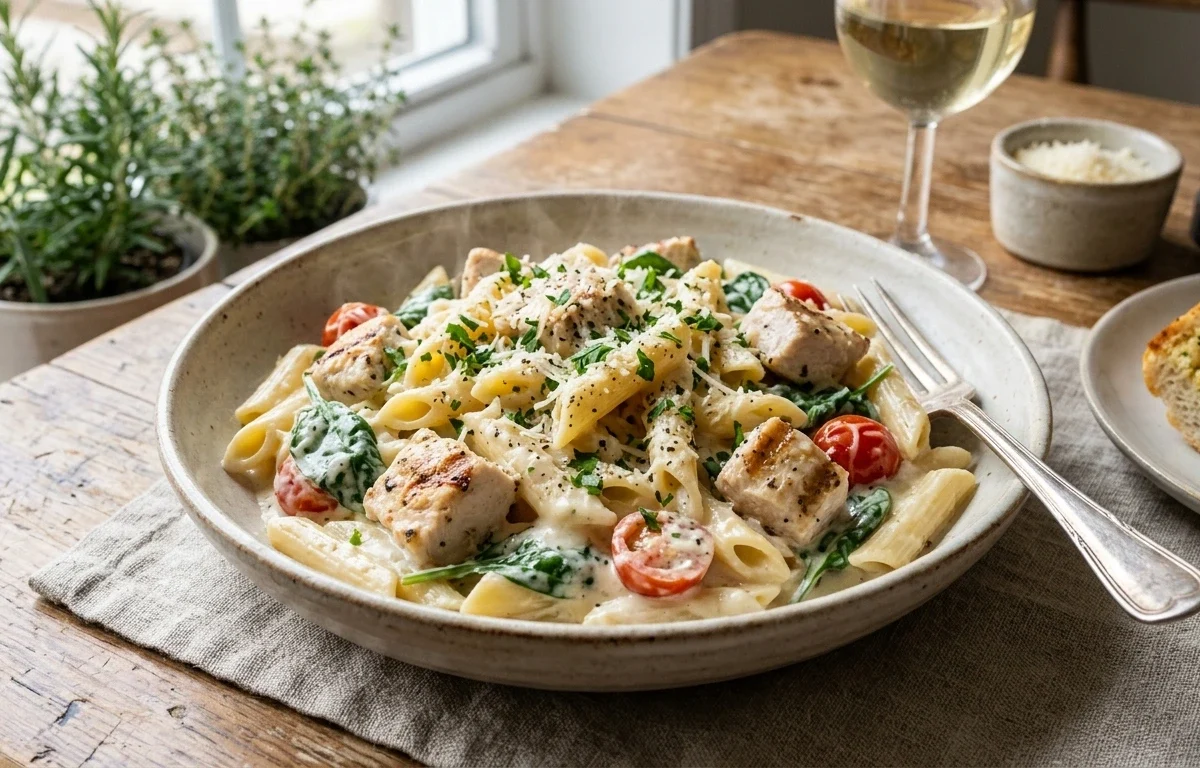
If you have ever ordered creamy chicken pasta at a restaurant and wondered why home sauces sometimes turn out split or thick like glue, this recipe is for you. We slice boneless chicken breasts thin for fast, even searing, then build a pan sauce using fresh garlic, heavy cream, and freshly grated Parmesan. By utilizing starchy pasta water, we bind the butter and cheese into a velvety, restaurant-grade finish without needing any artificial thickeners.
Why You'll Love This Recipe
- Golden, seared chicken seasoned with Italian herbs for deep flavor in every bite.
- Silky garlic cream sauce that coats noodles evenly without breaking or turning greasy.
- Ready from start to finish in 30 minutes using basic pantry staples.
- Uses reserve starchy pasta water to create a natural, restaurant-quality emulsion.
Ingredients You'll Need (and Why)
Heavy Whipping Cream: High fat content (at least 36%) prevents the sauce from curdling when mixed with hot pasta water and acidic seasonings.
Freshly Grated Parmesan: Pre-shredded bagged cheese contains anti-caking agents like cellulose that prevent smooth melting, leading to a grainy sauce.
Reserved Pasta Water: The salty, starchy water acts as a natural emulsifier, binding fat and liquid into a smooth, glossy sauce that clings to pasta.
Fresh Garlic: Sautéing freshly minced garlic softly in butter releases fragrant essential oils that form the core flavor base of the pan sauce.
How to Make It
1. Sear the Chicken Breast
Slicing thick chicken breasts horizontally into cutlets cuts cooking time in half and guarantees even heat distribution. Searing in a hot combination of olive oil and butter browns the exterior quickly without drying out the center. The golden crust left in the pan leaves behind rich browned bits (fond) that will deeply flavor your cream sauce.
2. Deglaze and Build the Pan Sauce
After gently sautéing fresh garlic so it softens without scorching, pour in chicken broth to deglaze. Scraping up the browned bits dissolves all that caramelized flavor straight into the liquid. Stirring in heavy cream and bringing it to a light simmer concentrates the fat, creating a rich foundation for the cheese.
3. Emulsify with Parmesan & Pasta Water
The secret to a silky garlic cream sauce is taking the pan off direct heat before stirring in freshly grated Parmesan. High heat causes dairy proteins to tighten up into rubbery clumps. Stirring in hot starchy pasta water a splash at a time binds the liquid and fats together into a smooth emulsion that coats noodles perfectly.
Success Tips
- Grate your Parmesan fresh from a block using a microplane; pre-shredded cheese will make your sauce grainy.
- Kill the heat before adding cheese so dairy fats don't break and separate into oily pools.
- Never skip saving pasta cooking water before draining—it is your insurance policy for fixing a sauce that is too thick or split.
- Cook pasta 1 minute under package directions so it finishes cooking directly inside the hot sauce, absorbing maximum flavor.
Variations
- Add 2 cups of fresh baby spinach during the final minute of simmering the cream sauce until gently wilted.
- Include 1/3 cup of chopped sun-dried tomatoes alongside garlic for a rich, tangy Mediterranean twist.
- Swap chicken breasts for peeled, deveined jumbo shrimp cooked for 2 minutes per side.
Storage & Make-Ahead
Fridge: Store leftovers in an airtight container for up to 3 days. Reheat gently on the stove over low heat with 1-2 tbsp of milk or water to restore creaminess.
FAQ
Why did my cream sauce turn out grainy?
Grainy sauce happens when cheese is added over direct high heat or when pre-shredded cheese with anti-caking agents is used. Take the pan off heat and use microplane-grated Parmesan.
Can I use milk instead of heavy cream?
Milk has a lower fat content and high moisture content, which makes it prone to curdling when boiled and won't thicken naturally like heavy cream. Stick to heavy whipping cream or half-and-half mixed with a teaspoon of cornstarch.
How do I fix sauce that is too thick?
Simply splash in reserved hot pasta water 1 tablespoon at a time while tossing your noodles over low heat until it reaches your desired velvety consistency.