
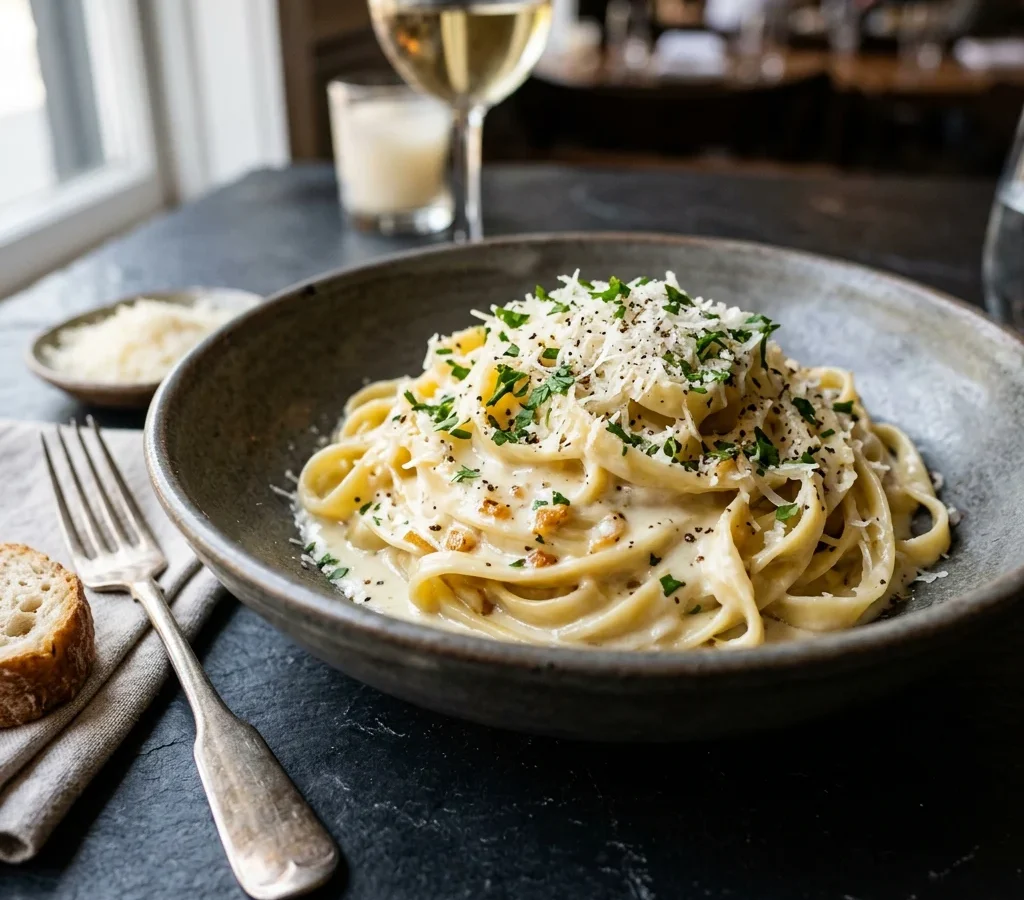
When you need a comforting meal with minimal effort, this creamy garlic butter pasta delivers every single time. Made with a rich blend of butter, garlic, heavy cream, and Parmesan cheese, it comes together in the time it takes to boil a pot of noodles. Let's walk through how to make a restaurant-quality cream sauce right in your own kitchen without any fuss.
Why You'll Love This Recipe
- Ready in just 20 minutes from start to finish using everyday pantry staples.
- No jarred sauces needed—you will make a velvety, rich cream sauce completely from scratch.
- Easily adapts to whatever shape of pasta you already have in your pantry.
- Features a perfectly balanced garlic flavor that is savory without overpowering.
- Leaves you with a starchy splash of pasta water to effortlessly tie the sauce and noodles together.
Ingredients You'll Need (and Why)
butter: Provides the rich foundational fat that carries the garlic flavor and helps build the base of the pan sauce.
garlic: Sautéed gently in butter to release aromatic oils, giving the sauce its savory backbone. Watch it closely so it turns golden rather than burnt and bitter.
heavy cream: Brings the luxurious mouthfeel and creates a stable, creamy emulsion when combined with the cheese and starchy pasta water.
grated Parmesan cheese: Melts into the cream to thicken the sauce naturally while adding a deeply savory, umami-rich punch.
How to Make It
Boil the Pasta and Save the Water
Start by cooking your pasta in generously salted water until it hits that ideal al dente bite. Crucially, remember to scoop out a half cup of the starchy cooking water before you drain the pot. That cloudy water is your secret weapon for turning a separated sauce into a glossy, cohesive coating.
Infuse the Butter and Build the Cream Base
Melt your butter over medium heat and let the minced garlic sizzle gently until it smells amazing. Keep the heat moderate so the garlic infuses the fat without turning brown and bitter. Pouring in the heavy cream and melting the Parmesan creates a rich, velvety foundation right in the skillet.
Toss and Tie It All Together
Add your drained pasta straight into the warm skillet sauce. Toss everything together, using splashes of that reserved pasta water if the sauce needs to loosen up and cling more evenly to every single noodle.
Success Tips
- Keep a close eye on your garlic while it sautés—it can go from perfectly golden to burnt and bitter in just a few seconds.
- Lower the heat before adding the heavy cream and Parmesan so the dairy doesn't curdle or separate in the pan.
- Don't skip reserving the pasta water. The starch in the water helps the cream and cheese bind smoothly to the pasta rather than pooling at the bottom of your bowl.
- Add the pasta directly to the skillet while it is still hot so it drinks up the surrounding sauce.
Variations
- Stir in a handful of fresh baby spinach at the same time you toss in the pasta for a pop of green and extra nutrients.
- Add grilled chicken breast or sautéed shrimp on top if you want to turn this vegetarian side into a hearty protein-packed main dish.
Storage & Make-Ahead
Fridge: Store leftover pasta in an airtight container in the refrigerator for up to 3 days. Reheat gently on the stove over low heat with a splash of milk or water to restore the creamy texture.
FAQ
Can I use milk instead of heavy cream?
Yes, you can substitute full-fat milk, but keep in mind the sauce will be noticeably thinner and less rich than if you use heavy cream.
Why did my Parmesan cheese clump up?
Cheese can clump if the pan is too hot when you add it. Reduce the heat to low before stirring in the Parmesan, and make sure to use freshly grated cheese rather than heavily processed pre-shredded varieties.
What type of pasta works best for this recipe?
Any shape will work! Long noodles like fettuccine or spaghetti hold onto the rich sauce beautifully, while tubular pastas like penne catch the creamy sauce in their centers.