

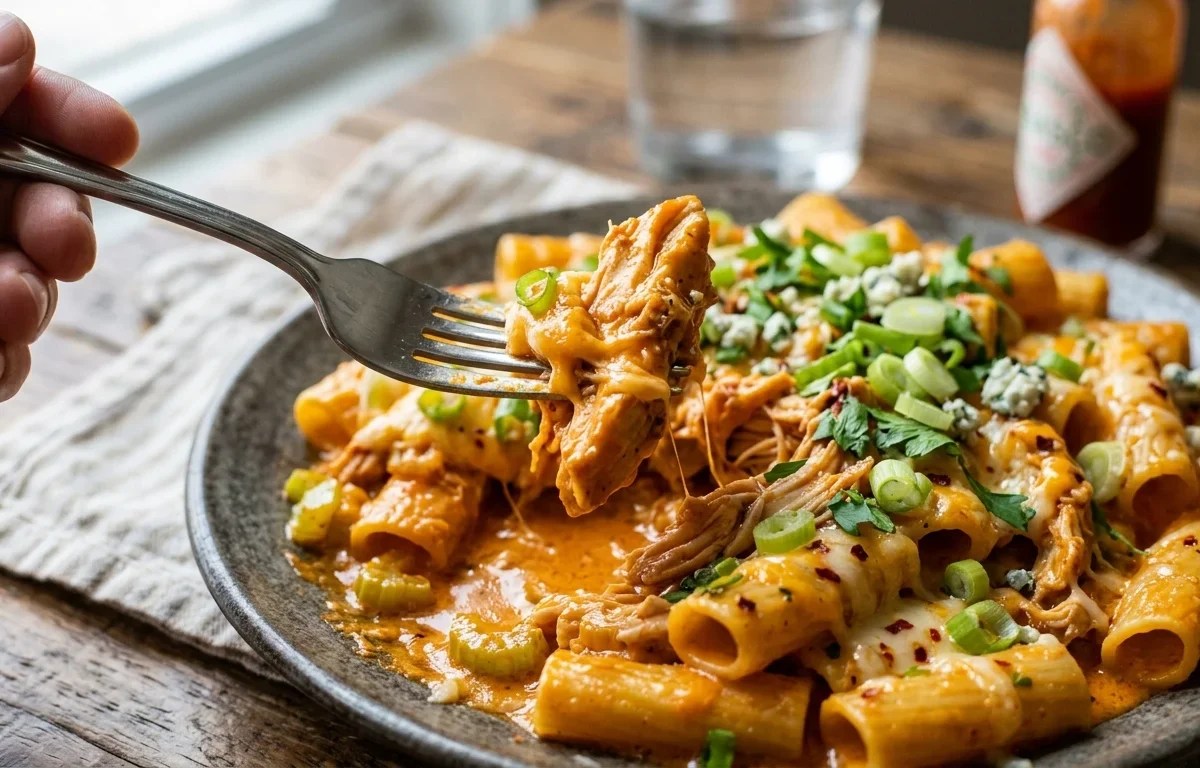
If you love spicy buffalo wings and velvety pasta, this dish brings both worlds together in just 30 minutes. We build a silky sauce using cream cheese, sharp cheddar, and reserved pasta water so every shell holds onto that tangy, spicy flavor. It is a hearty, comforting weeknight dinner that comes together easily without separating or curdling.
Why You'll Love This Recipe
- Short pasta shapes like cavatappi or conchiglie scoop up the silky buffalo sauce inside every nook.
- Using cream cheese prevents the sauce from breaking or separating when exposed to hot wing sauce.
- Uses pre-cooked or rotisserie chicken to shave 10 minutes off total prep time on busy evenings.
- Balanced kick of heat softened by real sharp cheddar and cream cheese for a rich flavor profile.
Ingredients You'll Need (and Why)
Cream Cheese: Acts as the emulsifying base, stabilizing the sauce so acidic hot sauce won't curdle the dairy.
Frank's RedHot: Provides the essential tangy, vinegar-forward heat classic to authentic buffalo flavor without overwhelming oiliness.
Reserved Pasta Water: Contains dissolved starches from cooking that bind the melted cheeses into a smooth, silky emulsion rather than a greasy pool.
Freshly Shredded Cheddar: Pre-shredded bagged cheese contains anti-caking agents like cellulose that stop it from melting smoothly, so block cheese is essential here.
Short Ridged Pasta: Shapes like cavatappi, penne, or shells feature ridges and hollows that physically trap thick cheese sauces.
How to Make It
Boil Pasta and Preserve Starch
Salt your boiling water generously until it tastes lightly like seawater; this seasoned water penetrates the pasta dough while cooking. Pulling the pasta off heat right at the al dente mark keeps it from turning mushy once tossed in hot sauce. Always collect your cooking liquid before dumping the pasta in a colander, as that liquid starch is the secret ingredient for smooth emulsion.
Build the Emulsified Sauce Base
Whisking cream cheese into warm chicken broth and hot sauce creates a stable emulsion that resists splitting. The high fat content and emulsifiers in cream cheese act as a bridge between acidic vinegar sauce and melted shredded cheese. Keep your heat on medium-low during this phase so you melt the block gently without scorching.
Melt Cheese and Toss to Coat
Lower the burner flame before introducing shredded sharp cheddar. Adding cheese gradually stops the sauce temperature from dropping abruptly, allowing the dairy fat to integrate seamlessly. Folding in warm cooked chicken and pasta last ensures every piece gets thoroughly glazed in velvety buffalo cream.
Success Tips
- Grate your own cheddar from a block; pre-bagged cheese is coated in cellulose which prevents a smooth melt.
- Keep heat low when adding shredded cheese to prevent the fats from separating into an oily layer.
- Don't skip reserving the pasta water; its starches are crucial for adjusting sauce thickness without diluting flavor.
Variations
- Buffalo Chicken Pasta Bake: Transfer the finished pasta to a 9×13 baking dish, top with an extra 1/2 cup of mozzarella, and broil for 3-4 minutes until bubbly and golden.
- Ranch Buffalo Pasta: Swap 1/4 cup of the chicken broth for 1/4 cup of ranch dressing or add 1 tablespoon of dry ranch seasoning mix into the cream cheese step.
Storage & Make-Ahead
Room temperature: Do not leave at room temperature for longer than 2 hours for food safety reasons.
Fridge: Store leftovers in an airtight container in the refrigerator for up to 4 days. Reheat gently on the stovetop over low heat with a splash of milk or chicken broth to re-emulsify the sauce.
Freezer: Freezing is not recommended because dairy-based cheese sauces tend to separate and become grainy upon thawing.
FAQ
Can I use leftover rotisserie chicken?
Yes! Rotisserie chicken works wonderfully in this recipe and saves significant prep time. Shred both breast and thigh meat for great texture.
How do I make this dish less spicy?
Reduce the Frank's RedHot sauce to 1/4 cup and compensate with an additional 1/4 cup of chicken broth or heavy cream to keep sauce volume consistent.
Why did my cheese sauce separate or turn oily?
Sauces separate when heat is too high or if pre-shredded cheese was used. Keep the heat on low when melting cheese and grate your cheese from a block.