
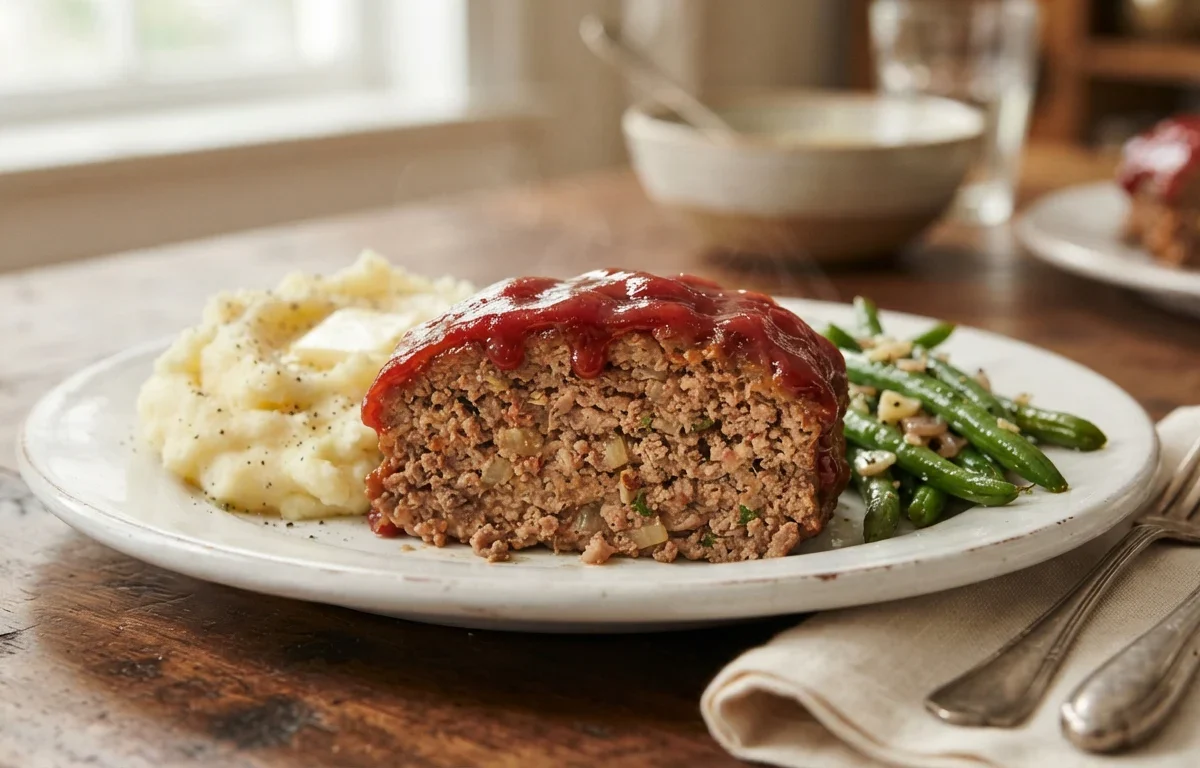
If you have ever suffered through a dry, crumbly meatloaf, you are not alone. Getting that perfect, tender slice that holds its shape without turning into a dense brick comes down to a few simple techniques. This classic homemade meatloaf relies on a moisture-boosting breadcrumb soak and a gentle hand during mixing to guarantee a tender bite every single time.
Why You'll Love This Recipe
- Stays exceptionally juicy and tender thanks to a clever milk-and-breadcrumb rest step.
- Features a perfectly balanced sweet, tangy, and savory glaze applied in two layers.
- Comes together quickly with everyday pantry staples you likely already have.
- Bakes up neatly in a standard loaf pan without needing complicated equipment.
- Pairs effortlessly with classic weeknight sides like mashed potatoes and green beans.
Ingredients You'll Need (and Why)
Breadcrumbs: Acts as a structural binder while trapping moisture inside the loaf so the meat stays soft instead of drying out.
Milk: Soaks into the breadcrumbs beforehand to create a moist panade, which keeps the ground beef tender.
Worcestershire sauce: Delivers a heavy dose of umami and savory depth that enhances the natural beef flavor.
Eggs: Binds the proteins together as they cook, ensuring your slices hold their shape on the plate without falling apart.
How to Make It
Building the Moisture Base
The secret to a non-crumbly meatloaf starts before the meat even touches the bowl. Whisking your eggs, dairy, and seasonings together and letting the breadcrumbs soak for five minutes creates a panade. This wet breadcrumb mixture traps moisture throughout the ground beef so your finished slices stay incredibly soft and juicy.
Gentle Mixing and Shaping
When adding your ground beef, think of folding rather than kneading. Overworking ground meat squeezes out proteins that bind too tightly, turning your tender loaf into a heavy, sausage-like texture. Mix just until the ingredients disappear into each other, then gently shape into your loaf pan.
The Two-Step Glaze
A great glaze needs time to caramelize without burning. Applying the first half before it goes into the oven bakes a sticky, savory baseline flavor directly onto the meat. Adding the second half during the final bake locks in a glossy, sticky finish that ties the whole dish together.
Success Tips
- Let the breadcrumbs sit in the wet mixture for the full 5 minutes so they can fully hydrate.
- Use your hands to gently combine the meat, stopping the moment the seasonings are distributed.
- Use a digital meat thermometer inserted into the center to check for the safe 160°F (71°C) internal temp.
- Allow the baked meatloaf to rest undisturbed for 10 minutes before slicing so the juices settle.
Storage & Make-Ahead
Fridge: Store leftover sliced meatloaf in an airtight container in the refrigerator for up to 3 to 4 days.
Freezer: Freeze fully cooled baked slices in a freezer-safe container or wrapped tightly in foil for up to 2 months. Thaw overnight in the fridge before reheating.
FAQ
Why did my meatloaf fall apart when slicing?
This usually happens for two reasons: not letting it rest long enough before cutting, or not using enough binding agents like eggs and breadcrumbs. Give it a full 10-minute rest on the counter so the proteins firm up.
Can I bake this on a baking sheet instead of a loaf pan?
Yes! Form the meat mixture into an 8×4-inch free-form loaf on a foil-lined baking sheet. Baking it free-form allows more fat to render out and gives you a larger surface area for that delicious glaze.
What is the best ground beef fat percentage to use?
An 80/20 or 85/15 ground beef blend is ideal. Leaner beef like 93/7 can result in a dry meatloaf because it lacks the natural rendered fat needed to keep the loaf moist during baking.