

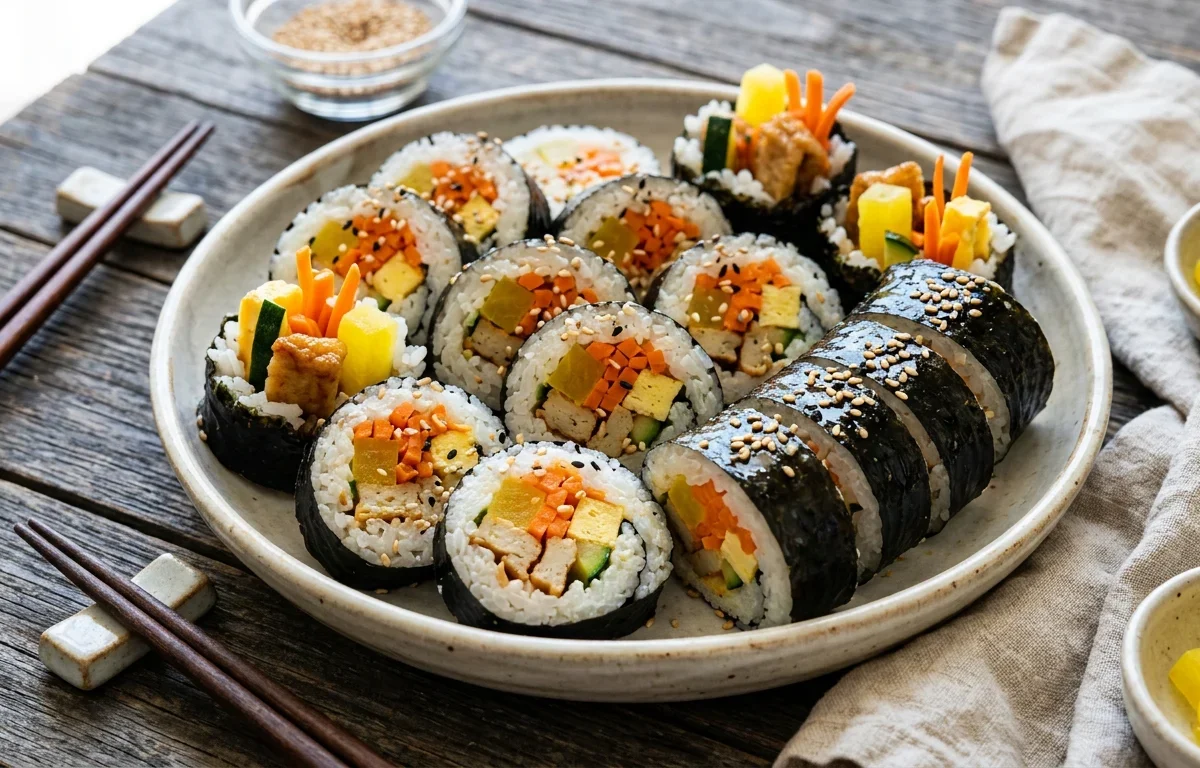
Making gimbap at home is a deeply rewarding kitchen project that yields a colorful, satisfying meal packed with contrasting textures and savory flavors. Unlike sushi, these Korean seaweed rice rolls feature cooked, sesame-oil-seasoned ingredients rather than raw fish, making them a fantastic, packable option for picnics, lunches, or a quick dinner. Don't worry if your first roll isn't museum-quality—with a little patience and a warm, moist bowl of rice, you will master the technique in no time.
Why You'll Love This Recipe
- Uses fully cooked, pantry-friendly ingredients that are easy to source at your local grocery store or Asian market.
- Completely customizable filling structure so you can feature your favorite vegetables and proteins.
- Naturally portable and holds its shape exceptionally well for packed lunches or outdoor gatherings.
- Balances savory, nutty, and slightly sweet flavor profiles in every single bite.
- Fun, hands-on assembly process that the whole family can join in on.
Ingredients You'll Need (and Why)
Short-grain or medium-grain white rice: Short- or medium-grain rice has enough natural starch to stay cohesive and cling together, whereas long-grain rice is too dry and separate for rolling.
Toasted sesame oil: Provides the signature nutty aroma and rich depth that coats both the rice and the finished rolls, while helping keep the exterior moist.
Korean seaweed (gim / nori): These toasted sheets provide a savory, briny exterior wrapper that holds all the inner components securely in place.
Korean fish cakes: Sautéed briefly with soy sauce and sugar, they add a comforting, slightly sweet umami chew that balances the fresh vegetables.
How to Make It
Seasoning and Preparing the Foundation
The secret to great gimbap starts with how you treat your rice. By folding the sesame oil and salt into warm rice, the grains absorb the flavor deeply without becoming mushy. Keeping the bowl covered with a damp towel prevents the surface from drying out, which is the number one culprit behind cracked seaweed sheets.
Cooking and Organizing the Fillings
Cooking each filling component individually—the carrots, zucchini, egg ribbons, and seasoned fish cakes—ensures that each ingredient retains its distinct flavor and crisp-tender texture. Laying them out in an organized staging area makes the final assembly line smooth and stress-free.
Rolling and Slicing with Precision
When building your rolls, leaving the top third of the seaweed bare gives the moisture a place to anchor when sealing the cylinder. Pressing firmly as you use the bamboo mat ensures there are no air pockets. Finally, wiping your knife with a damp, oiled cloth between cuts keeps the sticky rice from dragging across your clean slices.
Success Tips
- Keep your hands slightly damp with water or a touch of sesame oil when spreading the rice so it doesn't glue itself to your fingers.
- Don't overstuff your rolls with too many vegetables, or the seaweed will tear when you try to pull the mat over.
- Use a very sharp knife to slice the gimbap; a dull blade will crush the rolls and squash the fillings out the sides.
- Wipe the knife blade clean with a wet paper towel between every few cuts to maintain pristine, clean edges.
Storage & Make-Ahead
Room temperature: Gimbap is best enjoyed fresh at room temperature within a few hours of making it.
Fridge: If you must store leftovers, keep them in an airtight container in the refrigerator for up to 1 day. Note that the rice will firm up when chilled; you can pan-fry refrigerated slices dipped in beaten egg for a delicious twist.
FAQ
Can I use regular sushi rice?
Short-grain or medium-grain white rice works best because it has the right stickiness. If you have standard sushi rice on hand, it will work wonderfully as long as it isn't overly vinegared like sushi rice typically is for nigiri.
Why does my seaweed tear when I roll it?
Seaweed usually tears if it becomes too dry or if the roll is overstuffed. Keep your unrolled sheets in a sealed package until ready to use, and make sure your rice is warm and moist.
Do I need a bamboo rolling mat?
A bamboo mat makes it much easier to achieve a tight, uniform cylinder, but in a pinch, you can use a clean kitchen towel or a sheet of plastic wrap to guide your roll.
Special Tools
Affiliate linksThe equipment that makes this recipe easier. Optional, but it helps.
As an Amazon Associate we earn from qualifying purchases. Links below are affiliate links, at no extra cost to you.