

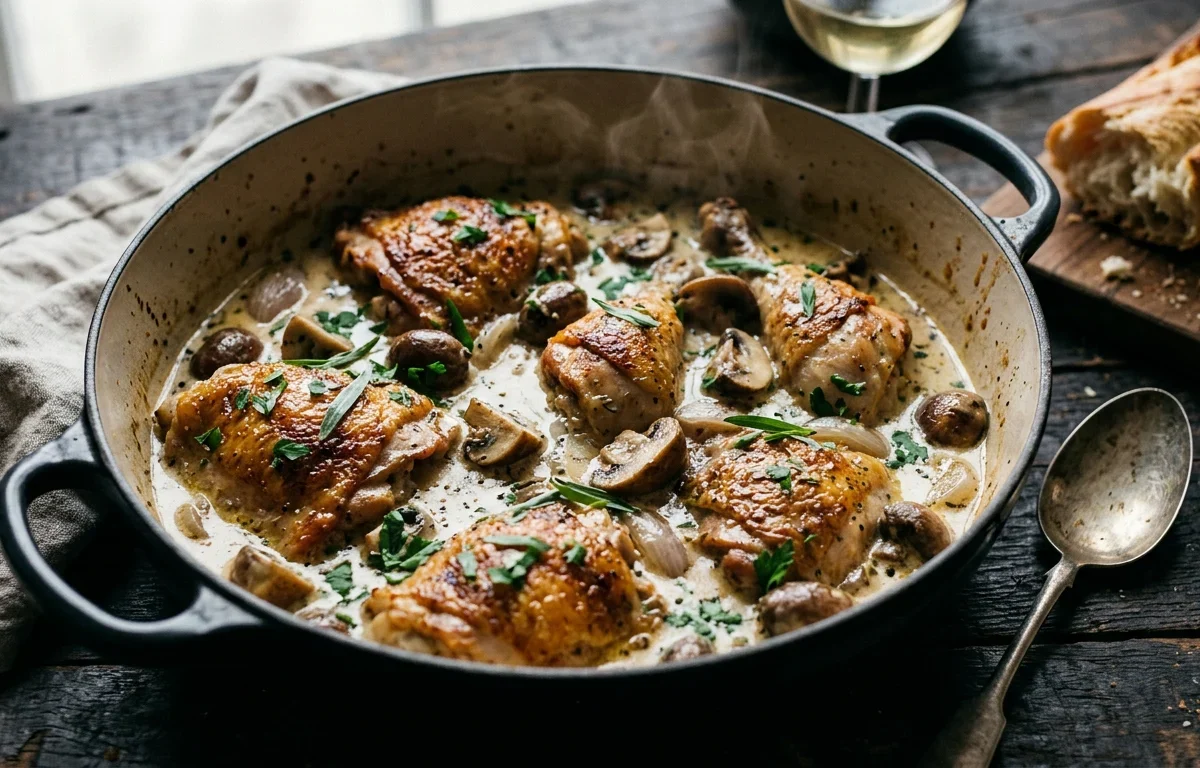
If you have ever wanted to master a classic French dish without feeling intimidated, this traditional chicken fricassee is your best starting point. By taking a little extra time to dry brine the chicken, you unlock incredible savory depth and a gorgeously crisp sear before it gently simmers in a rich, lemony broth. Finished with a silky egg and cream liaison, it delivers restaurant-quality comfort straight from your own Dutch oven.
Why You'll Love This Recipe
- Dry-brining the chicken overnight guarantees deeply seasoned meat and extra-crispy skin during the initial sear.
- Using a parchment paper cartouche helps trap and circulate moisture evenly so the chicken stays exceptionally tender.
- The egg yolk and heavy cream liaison creates a luxurious, velvety sauce without splitting or curdling.
- It all comes together in a single heavy-bottomed Dutch oven, making cleanup wonderfully straightforward.
Ingredients You'll Need (and Why)
Bone-in chicken: Using bone-in pieces keeps the meat much juicier during the braising process and releases gelatin that naturally thickens the pan juices.
Duck fat: Duck fat provides a superior high-heat cooking surface and adds a rich, savory backdrop that standard vegetable oils simply cannot match.
All-purpose flour: Acting as a mild thickener, this small amount of flour helps body the pan juices so they cling to the meat rather than remaining watery.
Chicken stock and lemon juice: The acidity cuts through the richness of the fats and helps dissolve the caramelized fond on the bottom of the pan to build deep flavor.
Egg yolks and heavy cream: Combined into a liaison, they enrich the sauce at the very end, adding a glossy finish and velvety mouthfeel without overpowering the dish.
How to Make It
The Overnight Dry Brine
Salting the chicken ahead of time does more than just season the exterior; it draws out surface moisture and restructures the proteins. Leaving it uncovered in the fridge allows the air to dehydrate the skin, which is the secret to achieving that crackling, golden-brown sear without sticking to your pan.
Searing and Building Fond
Getting a deep, rich color on your chicken and mushrooms builds the flavor foundation of the entire dish. When you pour in the stock and lemon juice mixture, those caramelized pan drippings dissolve into the liquid, creating a concentrated base that turns an ordinary broth into a remarkable sauce.
The Gentle Simmer with a Cartouche
A parchment paper cartouche acts as a custom lid that sits directly on the food, preventing evaporation while ensuring every piece of chicken stays submerged in the aromatic broth. Keeping the heat low guarantees the meat becomes fork-tender without drying out.
Finishing with the Liaison
Adding raw eggs to a hot pan is a recipe for scrambled eggs, which is why tempering is essential. By slowly whisking hot broth into your cream and egg yolk mixture, you safely bring up their temperature so they can thicken the sauce into a glossy, restaurant-worthy finish off the active boil.
Success Tips
- Do not skip patting the chicken completely dry after its overnight rest; any leftover moisture will steam the skin instead of frying it to a crisp.
- When making the liaison, pour the hot broth into the egg and cream mixture in a slow, steady stream while whisking vigorously to prevent curdling.
- Keep the heat at an absolute minimum once the egg liaison is stirred back into the pan; boiling the sauce at this stage will break the emulsion and curdle the eggs.
Storage & Make-Ahead
Fridge: Store leftover chicken fricassee in an airtight container in the refrigerator for up to 3 days.
FAQ
Can I use chicken breasts instead of a whole cut-up chicken?
This recipe relies on a mix of bone-in pieces for the best flavor and moisture balance. If you only use white meat, be careful not to overcook the breasts so they don't dry out.
What can I use to deglaze the pan?
Chicken stock brightened with fresh lemon juice works beautifully here. Vegetable stock is a good alternative. Avoid sweet juices, as they will throw off the savory balance of the sauce.
Why did my sauce curdle?
Curdling usually happens if the heat was too high when the egg and cream liaison was added, or if the sauce was allowed to boil afterward. Always keep the heat on minimum at the very end.
Special Tools
Affiliate linksThe equipment that makes this recipe easier. Optional, but it helps.
As an Amazon Associate we earn from qualifying purchases. Links below are affiliate links, at no extra cost to you.