
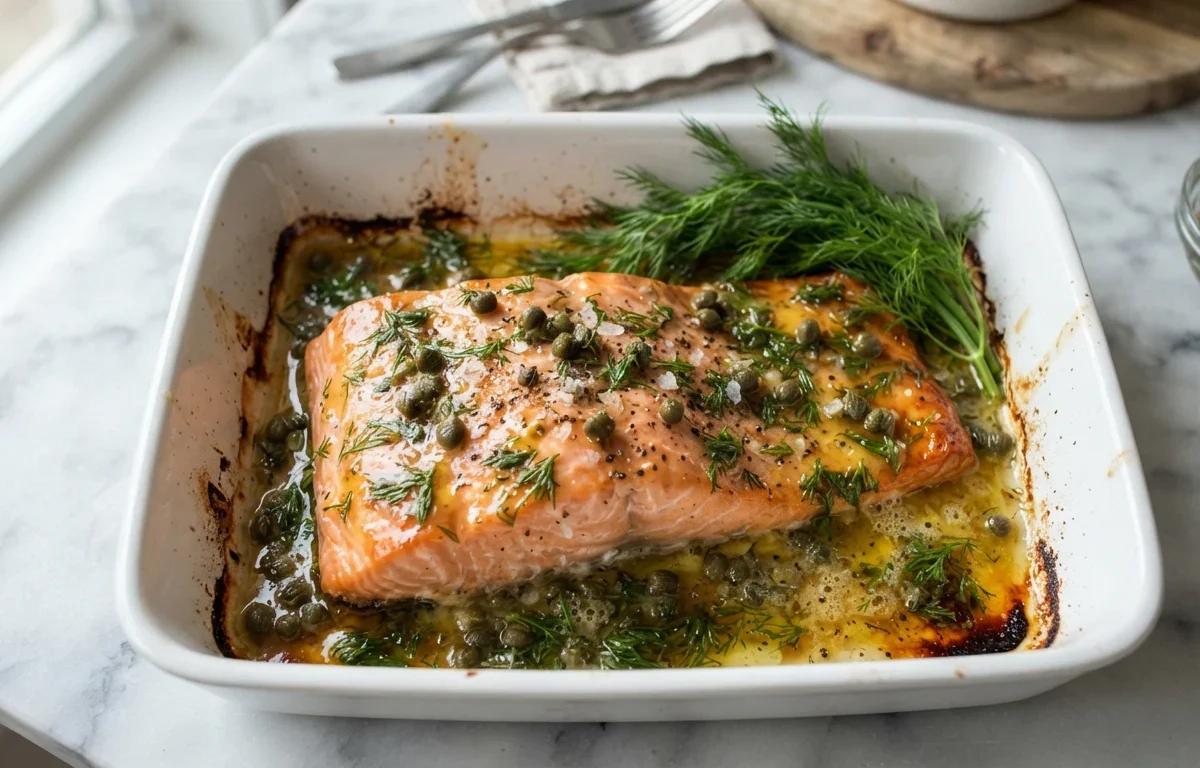
If you want a foolproof seafood dinner that comes together with minimal cleanup, this baked lemon Dijon salmon with dill and capers is your answer. The bright citrus, sharp mustard, and briny capers create an effortless glaze that keeps the fish incredibly moist in the oven. Don't worry if you are nervous about overcooking fish—this method and sauce protect the salmon and guarantee a tender result.
Why You'll Love This Recipe
- The Dijon and olive oil glaze locks in moisture, preventing the salmon from drying out in the oven.
- Ready from start to finish in just 20 minutes, making it ideal for busy weeknights.
- Requires only one small bowl to mix the sauce and a single baking dish.
- Naturally gluten-free, low-carb, and packed with healthy omega-3 fatty acids.
- The bold combination of fresh dill and capers delivers restaurant-quality flavor at home.
Ingredients You'll Need (and Why)
Dijon mustard: Acts as an emulsifier in the glaze, helping the olive oil and lemon juice cling to the top of the salmon instead of running off into the pan.
Olive oil: Provides healthy fats that supplement the natural oils in the salmon, ensuring a tender and flaky texture.
Fresh lemon juice: Cuts through the natural richness of the salmon with bright acidity, elevating the entire flavor profile of the dish.
Capers: Adds bursts of briny, savory saltiness that balance the sharp mustard and tart citrus.
How to Make It
Whisking the Glaze
The secret to this dish is creating a cohesive glaze before it ever touches the fish. By whisking the Dijon mustard, olive oil, and lemon juice together vigorously, you force the oil and liquid to temporarily bind. This keeps the fat and acid distributed evenly across the salmon so every bite has the same balance of flavors.
Baking with Confidence
Salmon cooks quickly, and the thick layer of mustard glaze acts as a thermal blanket that protects the top of the fish from drying out in the heat. Keep an eye on the clock starting at the 12-minute mark so you can pull the fish the moment it turns opaque and flakes easily with a fork.
Success Tips
- Do not overbake the salmon; pull it out when the internal temperature reaches 135°F to 140°F for a flaky, tender texture.
- Make sure to whisk the Dijon and olive oil until smooth before adding the lemon juice and capers so the emulsion holds.
- Pat the salmon fillet completely dry with paper towels before pouring the glaze over it to help the mustard mixture adhere better.
Storage & Make-Ahead
Fridge: Store leftover cooked salmon in an airtight container in the refrigerator for up to 2-3 days.
FAQ
Can I use frozen salmon for this recipe?
Yes, but make sure the salmon fillet is completely thawed and patted dry with paper towels before applying the glaze so the sauce doesn't slide off.
How do I know when the salmon is done baking?
The salmon is done when it easily flakes apart with a fork and the flesh has turned from translucent pink to an opaque, lighter pink.
Can I use dried dill instead of fresh?
Fresh dill provides the best bright herbal flavor and vibrant color for this dish, but if you must substitute, use one-third of the amount in dried dill.