
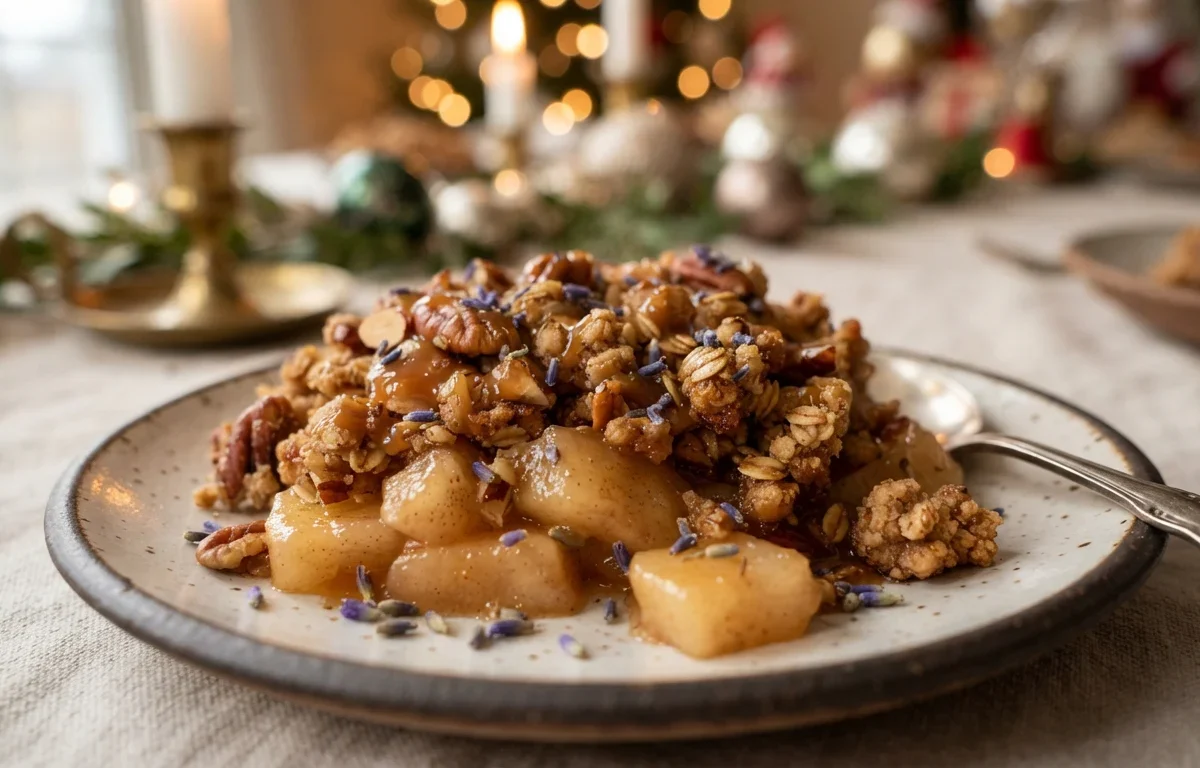
Warm cinnamon apples baked beneath a buttery golden oat crumble with a delicate touch of lavender herb make this cozy dessert an absolute joy to bake. It combines classic fall flavors with a subtle floral twist, creating a beautiful dish for family dinners, weekend gatherings, and holiday tables. Don't worry if you haven't baked with herbs before—keeping the quantity modest ensures a gentle, aromatic touch rather than an overpowering flavor.
Why You'll Love This Recipe
- Warm, tender baked apples infused with cinnamon and nutmeg
- A buttery, crunchy oat and pecan crumble topping
- A subtle, elegant floral aroma from culinary lavender
- An easy one-dish dessert that comes together with simple pantry ingredients
- Delicious served warm with a scoop of vanilla ice cream
Ingredients You'll Need (and Why)
Culinary Lavender Herb: A little goes a long way. Keeping the amount modest provides a subtle, fragrant floral aroma that complements the sweet apples without tasting medicinal.
Cornstarch: Acts as a thickener, mingling with the natural apple juices as they release during baking to create a glossy, cohesive filling rather than a watery one.
Cold Unsalted Butter: Using cold butter cut into cubes is essential for the crumble topping; as it bakes, pockets of steam form to create a crisp, flaky texture.
Lemon Juice: Adds a bright pop of acidity that balances the sweetness of the brown sugar and prevents the sliced apples from browning too quickly.
How to Make It
Tossing the Filling
The key to a great fruit filling is ensuring every slice is coated in the spice and thickener mixture. Tossing the apples with lemon juice and cornstarch protects their texture and guarantees that the juices thicken up nicely in the oven instead of pooling at the bottom of the dish.
Cutting in the Butter
When building your oat topping, working cold butter into the dry ingredients creates those sought-after pockets of crisp, buttery texture. Work quickly with your fingertips or a pastry cutter so the heat from your hands doesn't melt the butter before it hits the oven.
Baking and Resting
Bake until the juices bubble visibly around the edges and the topping turns a deep golden brown. Giving the crumble 10 to 15 minutes to rest on the counter is crucial; it lets the fruit juices settle and thicken so you can scoop neat, warm portions.
Success Tips
- Finely crush the culinary lavender between your fingers before adding it to avoid sudden bursts of strong floral flavor in a single bite.
- Cut your apple slices to a uniform thickness (about 1/4 inch) so they bake evenly and reach tenderness at the same time.
- If your oven runs hot and the oat topping browns too quickly in the first 20 minutes, loosely drape a sheet of aluminum foil over the top.
- Don't skip the resting time! Letting it cool slightly helps the cornstarch set the juices so your serving doesn't run all over the plate.
Variations
- Apple Lavender Caramel Crumble: Drizzle warm caramel sauce over the apples before adding the crumble topping.
- Apple Pear Lavender Crumble: Replace two apples with two ripe pears for a softer, sweeter fruit combination.
- Cranberry Lavender Crumble: Add ½ cup fresh or frozen cranberries for a tart fall variation.
- Walnut Lavender Crumble: Replace the pecans with chopped walnuts for a richer nutty flavor.
Storage & Make-Ahead
Room temperature: Can be kept covered at room temperature for up to 24 hours.
Fridge: Cover tightly and store in the refrigerator for up to 3 to 4 days. Reheat individual portions in the microwave or oven before serving.
Freezer: Freeze unbaked or baked in an airtight, freezer-safe container for up to 2 months. Thaw overnight in the fridge before reheating or baking.
FAQ
Can I use regular dried lavender from my garden?
Only if it is specifically certified culinary-grade, completely pesticide-free, and cleaned properly. Standard garden lavender can taste soapy or bitter.
What are the best apples to use for a crumble?
Firm, tart baking apples like Granny Smith, Honeycrisp, Braeburn, or Jonagold hold their shape well and balance the sweetness of the brown sugar.
Do I need to peel the apples?
Peeling is recommended for the best tender texture, but you can leave the peels on if you prefer a rustic style and extra fiber.