By Harry Cruse | TasteSavory
Feeding children can feel like a daily negotiation. One week a child loves pasta, the next week it’s suddenly off the menu, and the vegetables never seem to make it past the edge of the plate. There’s no magic fix, but a few simple habits make mealtimes calmer: a flexible plate formula, meals with familiar parts, foods cut and served safely, and a relaxed approach to trying new things. This guide offers meal ideas for every part of the day, tips for picky eaters, lunchbox food safety, and choking-safety basics for young children. It’s general information, not medical or nutrition advice for your child.
The short answer
- Build meals from simple parts: a protein, a starch or grain, a fruit or vegetable, and a dairy food or alternative.
- Serve something familiar alongside anything new.
- Keep offering new foods without pressure, since children often need many tries.
- For children under 4, cut round, firm foods into small, non-round pieces, and always supervise mealtimes.
- Keep lunchbox food cold or hot enough to be safe.
A simple plate formula
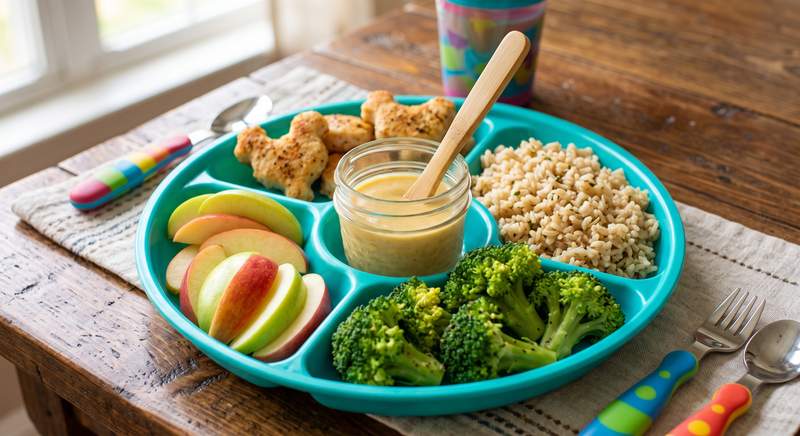
Instead of planning around individual recipes, think in building blocks. Choose one item from most of these groups, and mix and match through the week.
| Building block | Kid-friendly examples |
|---|---|
| Protein | Chicken, eggs, beans, lentils, fish, tofu, meatballs, plain yogurt, cheese |
| Starch or grain | Rice, pasta, tortillas, potatoes, bread, oats, couscous |
| Fruit or vegetable | Sliced apples or pears, berries, cucumber, cooked carrots, corn, peas, broccoli, sweet potato |
| Dairy or alternative | Milk, yogurt, cheese, or a fortified plant-based alternative |
If your child has allergies, medical needs, or a limited diet, your pediatrician or a registered dietitian can give guidance that fits them.
Meal ideas by time of day
Breakfast
- Oatmeal with fruit, or overnight oats made the night before
- Scrambled eggs with toast and fruit
- Yogurt with berries and a sprinkle of granola, for children who can safely chew it
- Mini muffins made from our banana bread batter, baked in a muffin pan
Lunch
- A “snack plate” with cheese cubes cut small, crackers, sliced cucumber, and fruit
- Quesadillas with beans or chicken, cut into wedges
- Pasta with a mild sauce and a side of vegetables. Our garlic Parmesan pasta is gentle on flavor and easy to adapt
- Sandwiches or wraps with a favorite filling
Dinner
- Build-your-own taco or rice bowls, with each topping in its own dish
- Oven-baked chicken tenders, cooked to 165°F (74°C). Our tips for juicy chicken breast help keep them tender
- Mini meatballs with rice and a vegetable
- Egg fried rice with peas and carrots
- Lentil and vegetable soup with bread for dipping. You can blend it smooth if your child prefers
Snacks
- Fruit with yogurt dip
- Cheese and whole-grain crackers
- Vegetable sticks (softened by steaming for younger children) with a mild dip
- Toast with a thin layer of nut butter, where nut allergies aren’t a concern
Tips for picky eaters
- Serve new foods next to familiar ones. A small spoonful of something unfamiliar next to a favorite feels less risky.
- Keep offering without pressure. Children often need to see a food many times before they try it. Try not to pressure, bribe, or force bites, which can make mealtimes tense.
- Share the responsibilities. Many feeding specialists recommend that adults decide what is served, when, and where, and that children decide whether to eat it and how much.
- Deconstruct dishes. Serve the parts of a taco or bowl separately so children can build their own.
- Offer dips and sauces. A mild dip can make vegetables more appealing.
- Involve children in cooking. Children are often more willing to try food they helped make.
- Eat together when you can. Children learn by watching adults enjoy a variety of foods.
Cooking together
Younger children can wash produce, tear lettuce, stir, and mash. Older children can measure, crack eggs, and, with supervision, chop soft foods and help at the stove. Always have everyone wash their hands with soap and water before cooking, and keep knives, hot pans, and boiling liquids under adult supervision.
Safety for young children
Choking
The American Academy of Pediatrics recommends that children under 4 not be given round, firm foods unless they are cut into small, non-round pieces, and it advises against giving young children foods such as nuts, seeds, hard candy, popcorn, and raw carrots. Hot dogs should be cut lengthwise into thin strips, and grapes should be cut into quarters. Cut foods so that pieces are no larger than about ½ inch, and spread nut butter in a thin layer rather than serving it in a spoonful or chunk. Children should sit while eating, never run, play, or lie down with food in their mouths, and an adult should be watching. Learning first aid for choking is a good idea for anyone who cares for young children.
Babies and allergens
Babies under 12 months have separate feeding guidance, including that honey should not be given before their first birthday. If you’re introducing allergenic foods such as peanuts, eggs, or milk, talk to your pediatrician for advice that fits your child.
Lunchbox food safety
- Keep cold food cold. Use an insulated lunch bag with at least two cold sources, such as ice packs or a frozen water bottle. Cold food should stay at 40°F (4°C) or below.
- Keep hot food hot. Preheat a thermos with boiling water, then fill it with food that is piping hot. Hot food should stay at 140°F (60°C) or above.
- Watch the time. Perishable foods such as meat, dairy, and cut fruit shouldn’t sit at room temperature for more than 2 hours.
- Pack it right. Chill sandwiches and other foods before packing, and keep sauces and dressings in separate containers so food doesn’t get soggy.
- Clean up. Wash lunchboxes and containers each day, and wipe the lunch bag regularly.
Making meals ahead can help on busy mornings. See our meal prep guide for safe storage times and freezing tips.
Troubleshooting
- Your child refuses a new food: That’s common. Serve a tiny portion again another day, with no pressure.
- They only eat a few foods: Keep offering variety alongside the accepted foods. If the list is very short or getting shorter, or you have concerns about growth or gagging, talk to your pediatrician.
- Dinner turns into a battle: Take pressure off. Serve the meal, let your child decide how much to eat, and end mealtime at a reasonable time.
- Lunch comes home uneaten: Ask your child what they’d like, offer smaller portions, and pack foods they can eat easily, such as pieces that are already cut.
- Food gets soggy in the lunchbox: Pack wet and dry items separately, and use a thermos or leak-proof containers.
FAQ
How do I know if my child is eating enough?
Children’s appetites vary from meal to meal and day to day. If you’re worried about growth or eating habits, your pediatrician can help.
Should I hide vegetables in food?
Some families blend vegetables into sauces and soups, which is fine. It also helps to serve vegetables openly, so children get used to how they look and taste.
Is it okay to serve dessert?
Many families do. Some feeding specialists suggest serving a small dessert as a normal part of the meal instead of using it as a reward, which can make it seem more special.
Are snacks okay?
Yes. Planned snacks at regular times can help children get through the day. Leave enough time before meals so they arrive hungry.
Conclusion
Good kids meals don’t need to be complicated. Use the plate formula, serve a familiar food alongside new ones, keep portions and pressure low, and keep food safe by cutting it appropriately, supervising young children, and storing lunches at the right temperature. Try one or two ideas this week, and build on the ones your family enjoys.